
A Teacher and Guardian Co-Designed System for Capturing Small Group Scientific Argumentation in High School Science
This National Science Foundation FINDERS Foundry award explores whether an AI‑supported and privacy‑aware tool can help teachers notice important but potentially “missed moments” during science learning. In many classrooms, students share ideas or get stuck, but educators are often not able to hear from every group or each learner at once. This project brings together an interdisciplinary team to co-create a privacy-first system which identifies signs of confusion, strong ideas, or erroneous discussion by students to enable educators to provide support in real time. An interdisciplinary leadership team including educators and caregivers will shape how the tool is designed, used, what data can be kept, and how students can opt out. This collaborative effort builds trust while protecting student privacy. By giving teachers better insight into group conversations, the project supports stronger science learning while providing more learner voice, and a classroom environment where all students are supported.
National Science Foundation (NSF) — Directorate for Technology, Innovation, and Partnerships (TIPS); Directorate for STEM Education
Funding: $49,999
Timeline: 7/15/2026 – 8/31/2027
Program: FINDERS Foundry
Principal Investigator
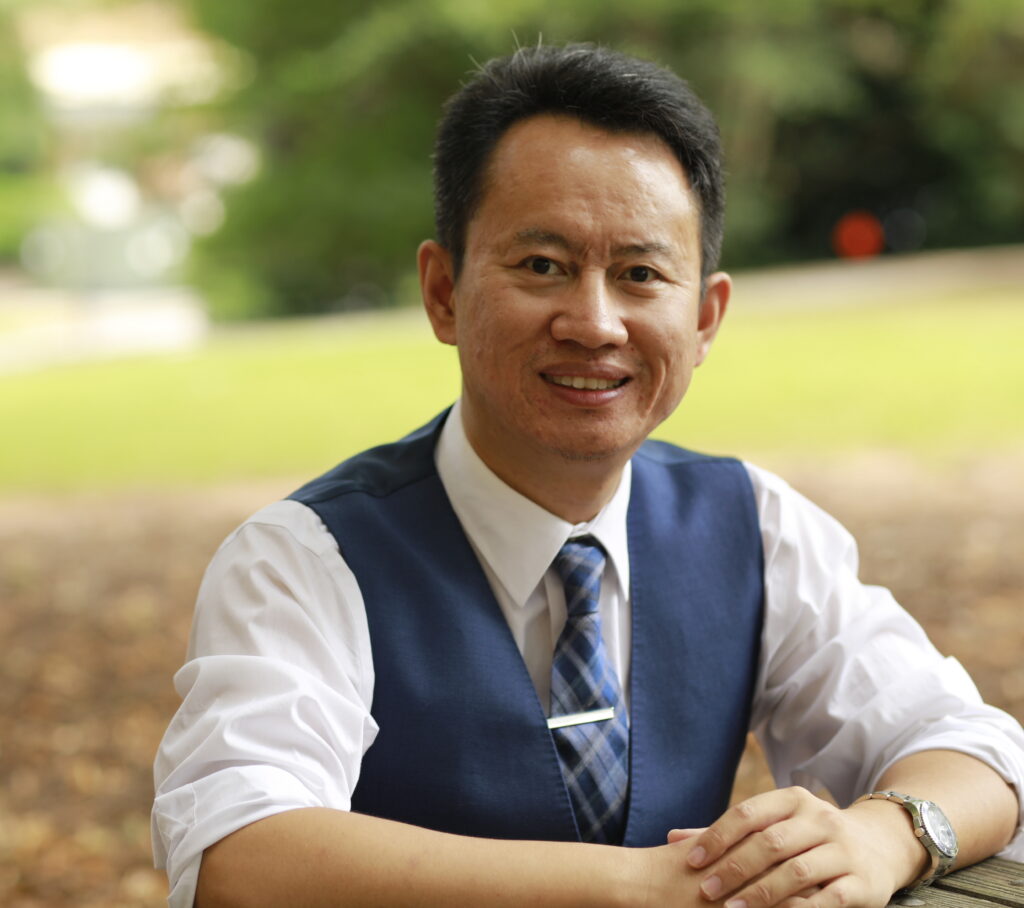
Xiaoming Zhai
Xiaoming Zhai is a Professor of Science Education and AI, and Director of the AI4STEM Education Center at the University of Georgia. His research focuses on integrating AI and Generative AI into science teaching, learning, and assessment to transform STEM education.
Co-Principal Investigator
Christina Chhin
Christina Chhin is an Assistant Research Scientist and Managing Director of the AI4STEM Education Center at the University of Georgia. Her research focuses on strengthening students’ motivation, engagement, and self-efficacy in STEM education.

Research Lead
Arne Bewersdorff
Arne Bewersdorff is a Postdoctoral Research Associate at the AI4STEM Education Center at the University of Georgia. His research focuses on artificial intelligence in science teaching and learning. His work follows two strands: students’ AI literacy and their conceptions of AI, and AI as a tool for learning, ranging from multimodal large language models and audio processing to AI-driven learning platforms and automated assessment. As Research Lead for the VoiceLens project, he leads the co-design with teachers and parents to develop privacy-aware AI tools that capture small-group scientific argumentation in the classroom.

Technology Lead
Jennifer Kleiman
Jennifer Kleiman is a Graduate Researcher at the AI4STEM Education Center at the University of Georgia. Her research focuses on artificial intelligence in mathematics teaching and learning. Jennifer set aside a 20-year corporate software engineering career and is using her development skills to help solve problems in math education and education research, while using her research skills to design and critically evaluate those solutions. Her work focuses on using AI to support STEM argumentation learning, taking a path from real-time audio processing, classroom discourse intervention, individual and group assessment, and teacher support, always with a focus on ethics and human-centered design. As the Technology Lead for the project, she designs and builds the audio capture and transcription pipeline for VoiceLens, and works alongside the project’s team to conduct feasibility testing and analyzes and disseminates results from the project.